
Premium Quality Peptides

Discreet Packaging

Fast & Reliable Shipping

Trusted Supplier Network

TB-500 is a synthetic peptide that represents the active fragment of Thymosin Beta-4, a protein found in most human and animal cells. It plays a role in cellular movement, tissue repair, and inflammation regulation, which is why it has become a focus in regenerative research.
Due to its relatively small structure, TB-500 is able to move efficiently through tissues, making it particularly useful in studies involving systemic healing and recovery processes.
R450,00 – R750,00Price range: R450,00 through R750,00
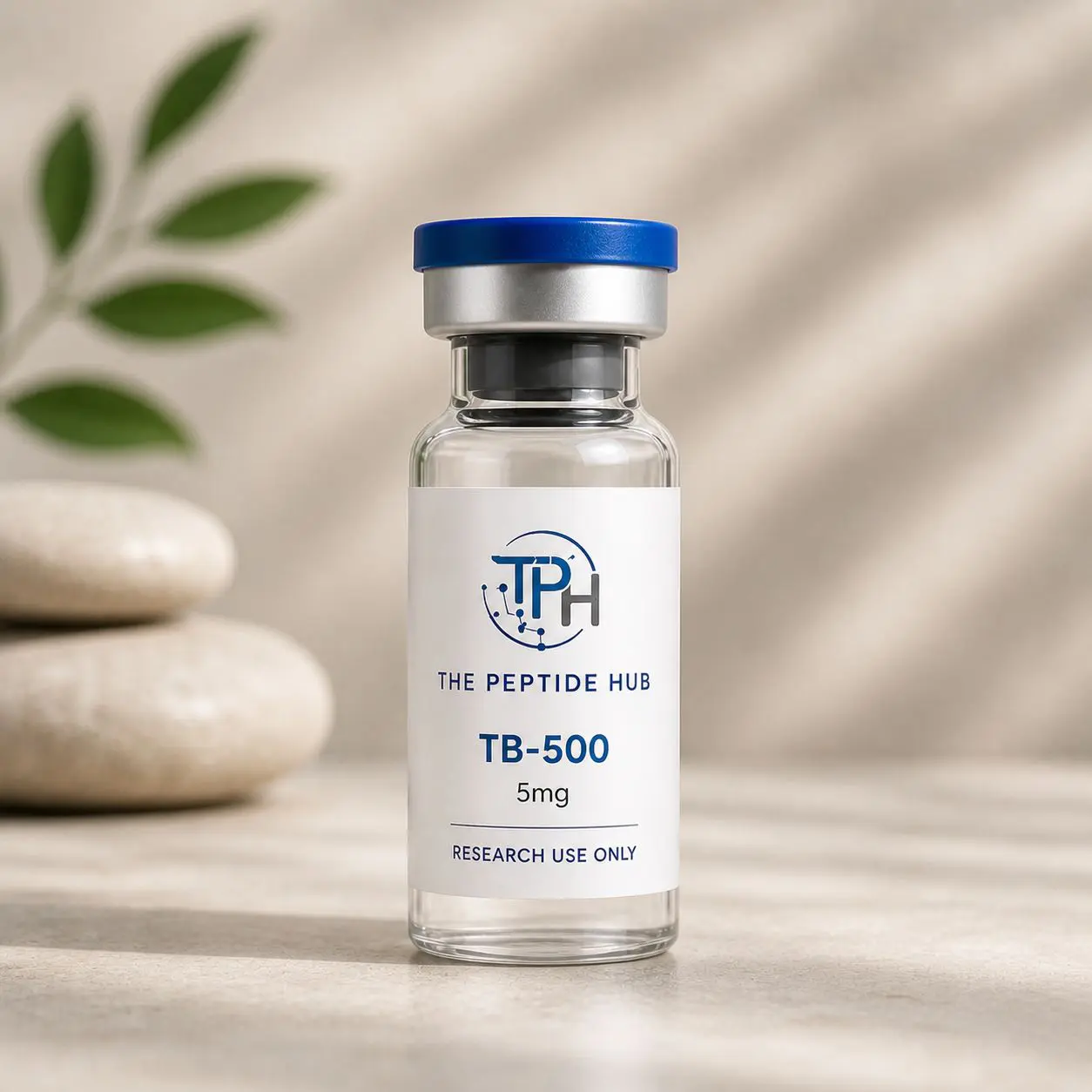
Key Research Areas & Observed Effects
In laboratory and preclinical research, TB-500 has been associated with:
Support for muscle recovery and repair following injury
Promotion of cell migration, a key factor in wound healing
Enhancement of angiogenesis (new blood vessel formation)
Reduction of inflammation in damaged tissues
Potential support in tendon and ligament repair
Improved flexibility and reduced fibrosis in experimental models
Most of these findings are based on animal studies and in vitro data, with limited human clinical research available.
Mechanism of Action (Research Insights)
TB-500 is believed to influence several biological processes involved in recovery and regeneration:
Actin Regulation:
TB-500 plays a role in regulating actin, a protein essential for cell structure and movement. This supports cellular migration to injury sites.
Angiogenesis Support:
It promotes the formation of new blood vessels, improving oxygen and nutrient delivery to damaged tissues.
Anti-Inflammatory Activity:
Research suggests it helps modulate inflammatory responses, which may support faster recovery in experimental models.
Tissue Remodeling:
TB-500 is involved in processes that help reorganise damaged tissue, contributing to more effective healing.
Scientific Applications
TB-500 is commonly used in research exploring:
Muscle and soft tissue injury recovery
Wound healing and tissue regeneration
Tendon and ligament repair models
Cardiovascular and vascular studies
Anti-inflammatory and fibrosis-related research
It is often studied alongside other regenerative peptides to better understand synergistic healing mechanisms.
TB-500 is widely studied for its role in cellular repair, inflammation control, and tissue regeneration. While early research is promising, particularly in injury and recovery models, robust human clinical data is still lacking, and further investigation is required to confirm its safety and effectiveness.
Important Disclaimer
TB-500 is a research compound and is not approved for human use by regulatory bodies such as the FDA or SAHPRA.
Any information provided is intended strictly for scientific and laboratory research purposes and should not be interpreted as medical advice.
Add 2 mL of bacteriostatic water to yield a working concentration of approximately 2.5 mg/mL. Allow the solution to dissolve gently—avoid shaking.
Measurement Reference:
At 2.5 mg/mL, 0.01 mL (1 unit on a U-100 insulin syringe) equals 25 mcg
Unreconstituted: Store frozen for long-term stability
Reconstituted: Refrigerate (2–8 °C) and use within approximately 4 weeks
Avoid repeated freeze-thaw cycles