
Premium Quality Peptides

Discreet Packaging

Fast & Reliable Shipping

Trusted Supplier Network

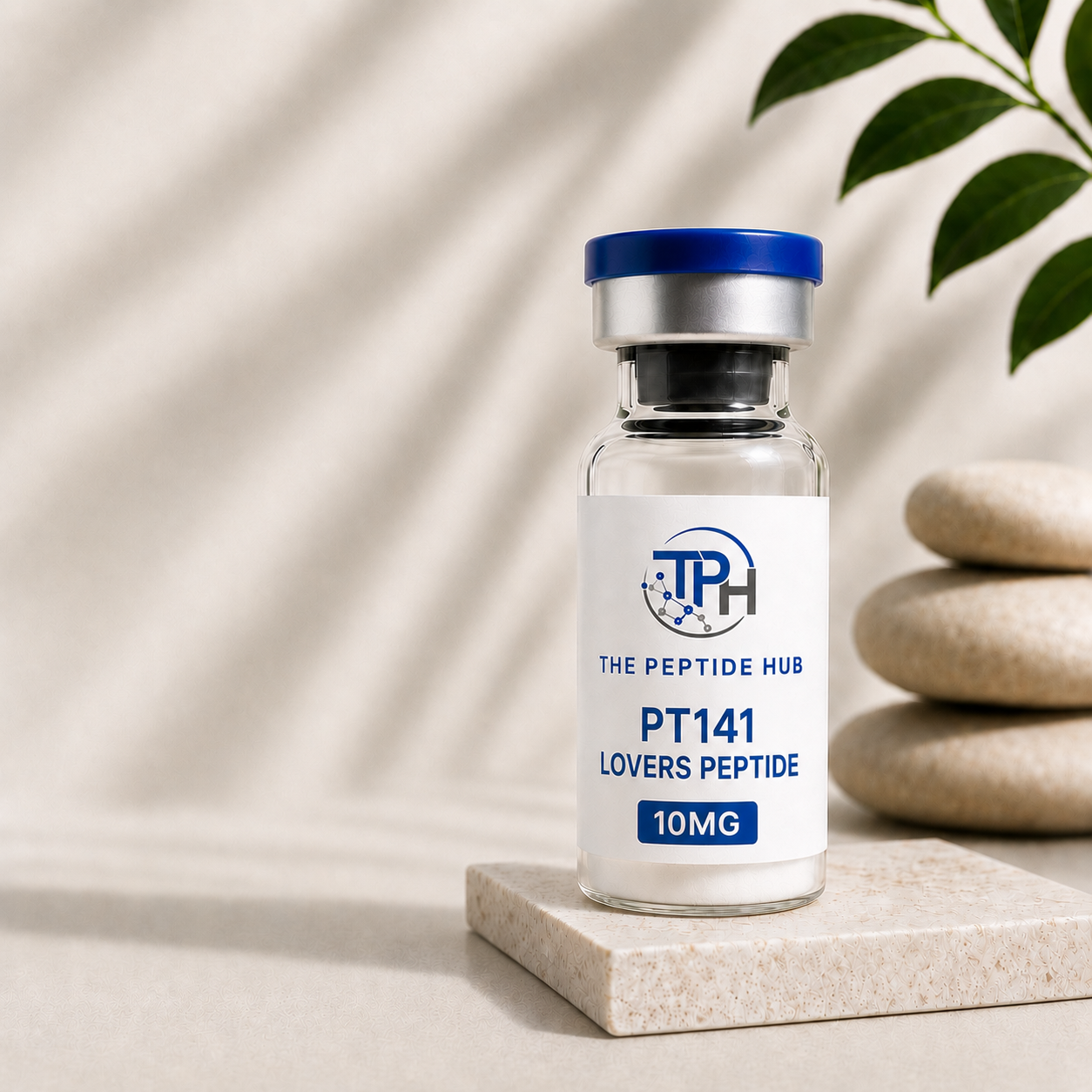
PT-141, also known as Bremelanotide, is a synthetic peptide originally developed from research involving Melanocortin receptors. Unlike compounds primarily focused on vascular effects, PT-141 has been studied for its interaction with neurological pathways involved in arousal and behavioural response.
It has attracted scientific interest due to its activity within the central nervous system and melanocortin receptor pathways
R420,00 – R1 500,00Price range: R420,00 through R1 500,00
Key Research Areas & Observed Effects
In laboratory and clinical research settings, PT-141 has been associated with:
Interaction with melanocortin receptor signalling pathways
Influence on neurological pathways linked to arousal response
Investigation into sexual health and behavioural response research
Central nervous system activity related to motivation and response signalling
Potential effects independent of vascular nitric oxide pathways
Some forms of Bremelanotide have undergone clinical investigation, though availability and approval status vary depending on country and intended use.
Mechanism of Action (Research Insights)
PT-141 primarily acts through the melanocortin receptor system:
Melanocortin Receptor Activation:
It interacts with receptors such as MC3R and MC4R, which are involved in neurological and behavioural signalling.
Central Nervous System Activity:
Unlike compounds that primarily target blood flow, PT-141 is researched for its effects on brain-mediated response pathways.
Neuroendocrine Interaction:
Studies suggest the peptide may influence neurotransmitter and hormonal signalling linked to motivation and behavioural response.
Scientific Applications
PT-141 is commonly studied in research involving:
Melanocortin receptor biology
Neuroendocrine signalling pathways
Sexual health and behavioural research
Central nervous system response studies
Hormonal and receptor interaction investigations
Its unique mechanism has made it a notable focus in melanocortin-related research.
Summary
PT-141 is a synthetic melanocortin-based peptide widely studied for its interaction with neurological and behavioural response pathways. Its central mechanism of action distinguishes it from many other compounds researched in related fields, though further research continues to evaluate its broader applications and long-term effects.
Important Disclaimer
PT-141 is a biologically active peptide and should be handled appropriately within research environments. Regulatory status may vary depending on formulation and jurisdiction.
This product and all associated information are provided strictly for scientific, laboratory, and educational purposes only and should not be interpreted as medical advice.
Reconstitution Guide:
Add bacteriostatic water carefully to achieve the desired concentration. Allow the peptide to dissolve gently—avoid vigorous shaking.
Storage Guidelines:
Unreconstituted: Store frozen for long-term stability
Reconstituted: Refrigerate (2–8 °C) and use within recommended timeframes
Protect from light and avoid repeated freeze-thaw cycles